Career
I lead artificial intelligence trade-offs in executive committees and on boards, in France and Switzerland. This practice rests on twenty years of responsibility for critical information systems, in industry, pharmaceuticals and healthcare, up to an ISO 15189-accredited hospital environment.
Founder and director of VEIA.AI. Governance and strategy of artificial intelligence for executive committees and boards of directors.
Twenty years of critical information systems in industry, pharmaceuticals and healthcare. Two years responsible for the information system of ISO 15189-accredited hospital laboratories.
France and Switzerland. Regulated or sensitive sectors: health and biotechnology, industry, services. Based in Colmar.
Higher diploma in management IT, network administration option. Vocational baccalaureate in network maintenance. French mother tongue, professional English.
Today
Since 2024, I have led VEIA.AI, an independent firm in the governance of artificial intelligence decisions. My doctrine holds in three words: decide before integrating. The mandate covers the trade-offs that commit the organisation upstream of deployment. Selection of use cases, mapping of dependencies, definition of what remains a human decision, conditions of reversibility. I arbitrate the choice of vendors and integrators as an independent third party, without commercial partnership of any kind.
Masterclasses, decision-framing sessions, decision meetings for executive committees, boards and specialised committees.
Fractional CAIO and standing advisor. Decision mandate, presence in governance bodies, continuous arbitration as a trusted third party.
Board Review for boards of directors, analysis of experiments after execution, review of realised value, arbitration recommendation.
Register of AI systems, responsibility matrix, mapping of dependencies, non-delegation thresholds, exposure perimeter to unframed uses.
Engagements led: Swiss luxury hospitality, biotechnology and health, industrial mid-caps, leadership ecosystems with MEDEF Alsace and BioValley France.
Speaking
Five filmed talks between 2025 and 2026, on the VEIA.AI channel. The tone and framing I bring to the executive committee. Talks in French.


January 2026

November 2025

October 2025

August 2025
The markers
AI governance and strategy consulting. Executive committees and boards of directors, France and Switzerland.
A 6,000-person hospital group. ISO 15189-accredited medical biology and pathology laboratories, five departments, sensitive health data. Replacement of a critical laboratory information system carried through in continuous operation.
Internal audit and building of service strategies, working with experts and management.
Novartis, Alcon, Veolia, PSA, Le Coq Sportif, Wrigley, GHRMSA. Industry, pharmaceuticals, distribution, health. Multi-site administration, delivery of critical projects, leadership of technical teams.
Recognition and output
Written contributor to the mission on the alignment of artificial intelligence systems entrusted to Senator Vanina Paoli-Gagin. Two publications cited and a synthesis note retained among the written contributions. Report submitted to the Government on 29 July 2026. The detail →
Manifesto of decisional AI sovereignty, White Paper on AI governance, note “Governing dependence”. Op-eds published at the Swiss Board Forum. The corpus →
Member of the Swiss Board Forum. Member of the CCIG, Geneva Chamber of Commerce, Industry and Services. Member of MEDEF Alsace. Partner of BioValley France.
Interview “Artificial intelligence: companies are tackling the subject head-on”, L'Alsace and DNA, 6 September 2026. In French. L'Alsace → DNA →
The story
Where this way of working comes from. Twenty years spent in the machine room, and what it teaches about responsibility.
I did not discover technology in books. I learned it hands-on, from the cable to the server, in environments where a failure shows immediately.
Where I kept the machines running
Novartis
Alcon
Veolia
PSA
Le Coq Sportif
Wrigley
GHRMSA
Pluris ExpertiseIndustry, pharmaceuticals, distribution, health. Different environments, one same requirement: that everything works, all the time.
The experience, underneath
For more than twenty years, I held the information systems of companies of every kind.
Servers, networks, messaging, backup, virtualisation, telephony: the invisible infrastructure that keeps an organisation running without anyone thinking about it. I installed it, administered it, repaired it, often under pressure, always with the same rule. Nothing works on its own, and someone must answer for it.
That responsibility rose a notch in environments where error is costly. At Alcon and Novartis, I learned the demands of the pharmaceutical world. Then, at Mulhouse hospital, I carried the information system of the medical biology laboratories, under ISO 15189 accreditation: the replacement of a critical system carried through without ever breaking operations, the interfacing with the patient record, the handling of a cyberattack, the degraded procedures and recovery plans. Auditability, traceability, human control, these are the words we find again today, almost identical, in the governance of artificial intelligence.
I never held these systems alone. I led teams of technicians, ran critical projects, and connected the technical field, management and, at the hospital, the medical teams. Translating from one world to another, making those who decide and those who execute understand one another: that is no doubt where the part that matters most today was formed.
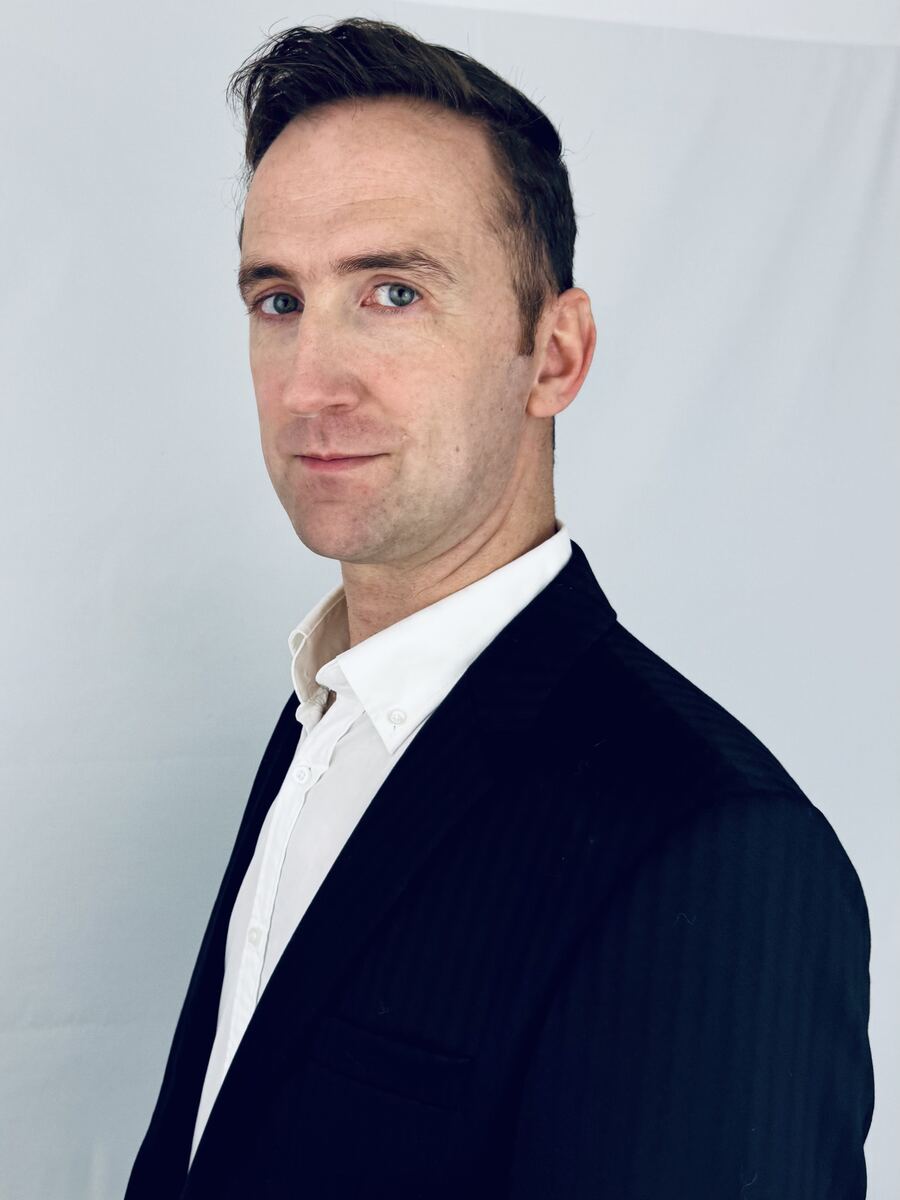
What that means, concretely
This is not a list to impress. It is proof that, when I speak of governing an artificial intelligence, I know exactly which machine, which flows and which responsibilities lie underneath.
Twenty years holding machines that others depended on. Then a question that rises: who answers when the machine decides in our place?
This is the ground VEIA.AI comes from. Not a theory about artificial intelligence, but a long habit of critical systems and what they demand. AI governance, for me, begins where I have always worked: at the boundary between what the machine does and what a human remains responsible for.